

The Hidden Story Behind Mitsubishi’s Car Logo

What connects a 19th-century Japanese shipping fleet to the modern crossover vehicles we drive today? The answer is the Mitsubishi three-diamond car logo. For over 150 years, this striking geometric emblem has shifted from a maritime trademark to a globally recognized automotive badge.
What Does the Mitsubishi Logo Mean?
The name “Mitsubishi” literally describes the logo’s geometry. It merges mitsu (three) and hishi (water chestnut, representing a rhombus or diamond shape in Japanese). The vibrant red diamonds symbolize reliability, integrity, and success, while the color red traditionally wards off evil spirits in Japanese culture. Imagine a 19th-century steamship raising a flag bearing these three red diamonds; that exact insignia now speeds down global interstates.
The story unfolds as a continuous timeline of thoughtful evolution, rooted in heritage while adapting to new eras.
Why the Three Diamonds?
The following timeline traces the journey of the Mitsubishi car logo, from concept to a physically timeless hallmark:
- 1870: Yataro Iwasaki founded a shipping company named Tsukumo Shokai.
- 1873-1874: Ships use the three stacked diamond mark as their emblem. Iwasaki combines the three-leaf oak crest of the Tosa Clan with his family’s three-stacked rhombus crest to create the visual foundation of the red logo.
- 1914: Mitsubishi officially registers the three-diamond emblem with the patent office. Designers lock the sharp red rhombuses into precise 60-degree angles to establish the impeccably balanced aesthetic recognized today.
- 1917: The brand pioneers Japanese auto manufacturing with the Mitsubishi Model A. The historic red diamonds proudly sit on the vehicle’s radiator grille.
- 1920s: The company enters aviation under the Mitsubishi Aircraft Co., with a logo that provides flawless continuity from its maritime roots. The shapes, sharp rhombuses meeting at the center, create a balanced, upward-pointing triangular formation suggesting stability and progress.
- 1970: Mitsubishi Motors Corporation is established as an independent automaker, seamlessly inheriting the trusted three-diamond mark.
- 1983: Engineers enclose the classic red diamonds within a sleek, unified tri-oval shape. This crucial aerodynamic enhancement allows the physical badge to sit flush against the sharply raked, sloping hoods of modern vehicles.
- 2016: Mitsubishi introduces a bold redesign by enclosing the triangles in a darker red oval. By simplifying the surrounding artwork, designers give the red diamonds massive visual impact.
- 2022 to Present: The automaker scales back its wordmark to a thin, all-caps font positioned subtly beneath the emblem. This shifts focus entirely back to the foundational geometric shapes, ensuring the red diamonds dominate digital environments.
The logo’s color and shape still do the same job they always have: the red diamonds deliver energy and visibility, while the tight triangular arrangement keeps the design sharp, balanced, and easy to remember. That combination helps Mitsubishi’s identity feel both historic and current.
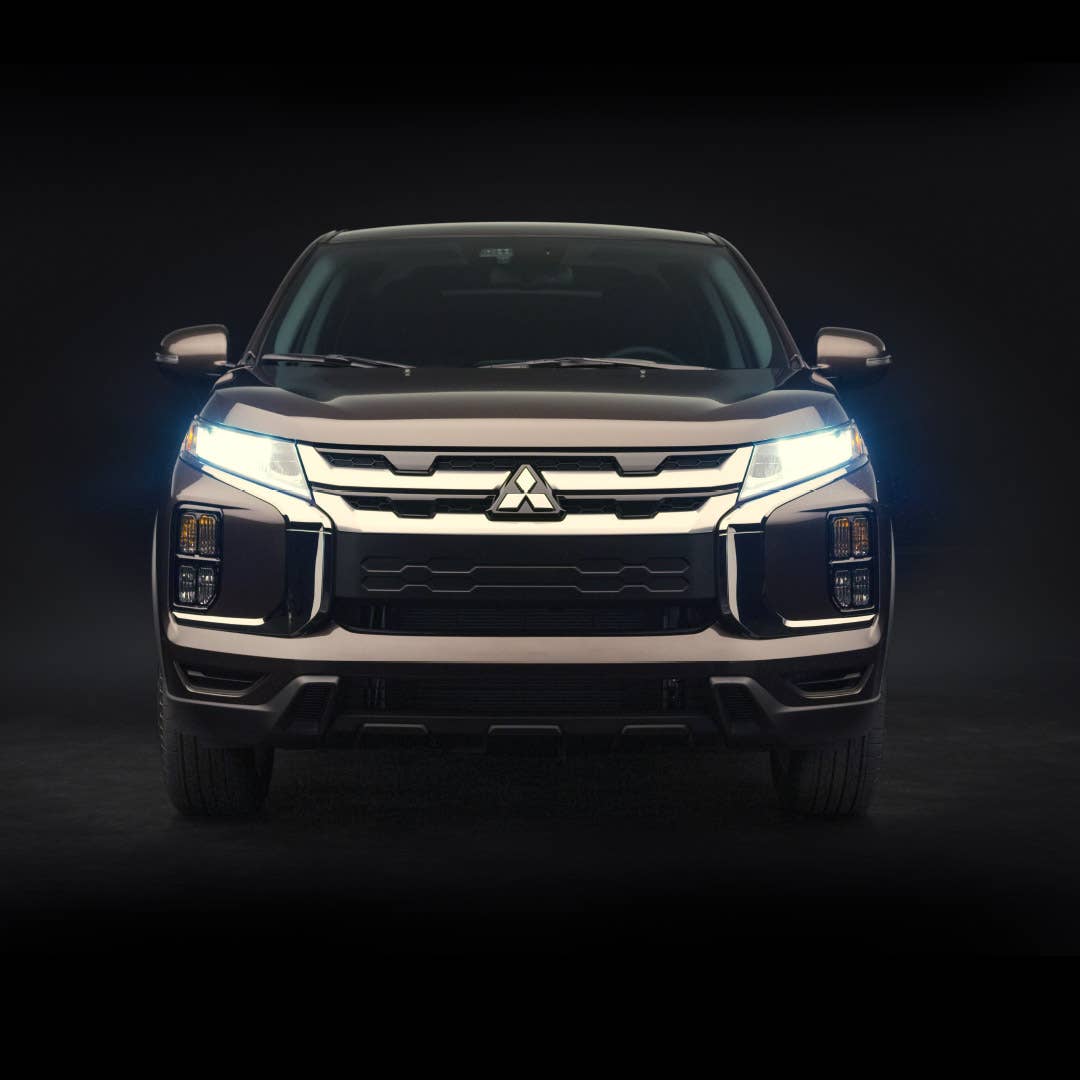
Photo Source/Copyright: Mitsubishi
FAQs About Mitsubishi’s Car Logo
Q: Did samurai heritage inspire the three diamonds?
A: Yes. The design fuses crests linked to the Tosa Clan (samurai lords) and the Iwasaki family, reflecting disciplined values from Japan’s historical clans.
Q: Did the logo exist before the company was named?
A: Yes. The visual three-diamond symbol flew on ships before the company officially coined the name “Mitsubishi” to verbally describe it.
Q: Is the Mitsubishi Pencil Company part of the automotive group?
A: No. Despite sharing the identical name and red logo, the pencil company is completely independent and registered its mark first in 1903.
Q: Did the Mitsubishi logo ever appear on a Mazda vehicle?
A: Surprisingly, yes. When Mazda introduced its very first vehicle in 1931, a three-wheeled truck called the Mazda-Go, it actually featured the Mitsubishi three-diamond logo. This rarity occurred because the Mitsubishi Corporation served as Mazda’s exclusive sales distributor during that time. The emblem combined the “Mazda” name with the iconic red diamonds, creating a fascinating oddity in early Japanese automotive history.
More from Miami Lakes Mitsubishi
2023 Mitsubishi Outlander Review: Should You Buy?
Photo Source/Copyright: Mitsubishi Many shoppers still start their car search with the 2023 Mitsubishi Outlander, and for good reason. That model year marked the settling-in phase of a complete redesign, establishing a strong reputation for offering standard seven-passenger seating and an industry-leading warranty. Whether you’re considering a brand-new model or shopping the pre-owned market,…
Outlander Sport vs. Eclipse Cross: Mitsubishi Comparison
Photo Source/Copyright: Mitsubishi The Eclipse Cross pushes out 184 pound-feet of torque, and every bit of it hits at just 2,000 revolutions per minute (RPM). Step into the Outlander Sport’s base 2.0-liter engine, and you’re looking at 145 pound-feet. A 39-pound-foot gap shows up fast when you’re pulling away from a green light…
Why The Mitsubishi Colt Sedan Stands Out
Photo Source/Copyright: Stellantis Mitsubishi has spent the better part of the last decade leaning aggressively into crossovers and SUVs, so it’s surprisingly easy to forget that the company’s very first passenger car was no high-riding utility vehicle. It was a modest, lightweight three-box sedan. Over the decades, the Colt badge has been affixed to…